
AI generated art?
It is not the object itself the beholder of art,
but the role it plays in the communication
between the creator and the observers.
In that sense, AI is a tool until proven otherwise.
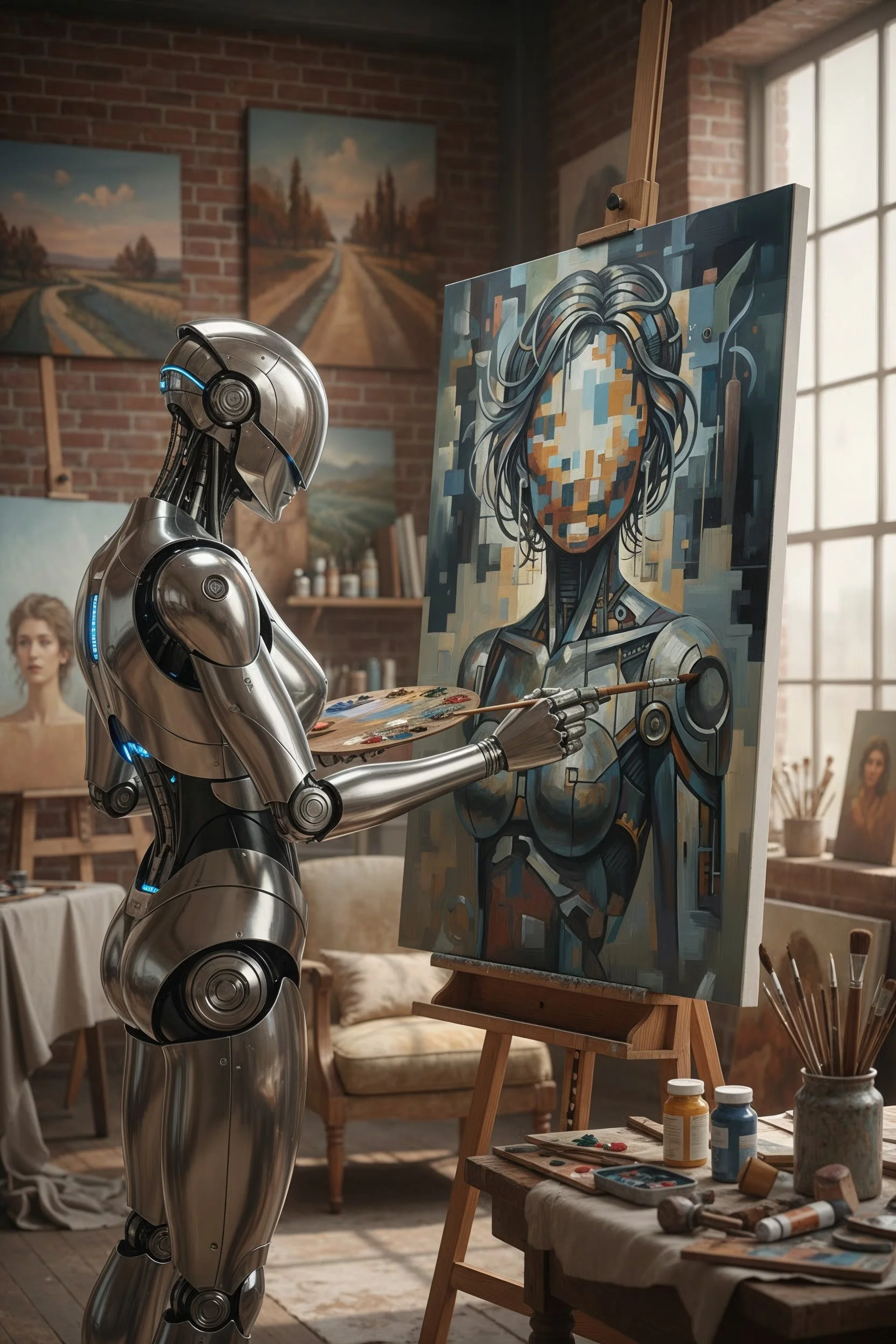
Art being an essentially human activity it is fair to question if AI can produce art. Beauty is a subjective quality, and even inanimate phenomena can generate beauty. However, whenever I see audiovisual content generated by AI, I loose interest. When any image or video can be created within instants, what is their value? What used to be difficult, impossible for a dancer is now trivial for its AI generated double. There is no effort, therefore, somehow, there is no artistic value. Is there?
Artists like Picasso are proof that amazing art can be created effortlessly. It is not the effort that makes their work valuable. However, the artistic value of a rug disappears when it is no longer weaved by a human, and I cannot pinpoint why. Prejudice? The object itself has no intrinsic artistic value. This resides either in the subjective appreciation of the viewer or in its role in the evolution of art. In this sense, there are two aspect which for me make a work “art”. One is related to form and the other to content.
If we look at the history of art we can identify styles and technics. These are result of both evolving technologies and formal choices by the creators who apply them in a particular way, establishing trends. Others follow them. The formal value of an art piece resides in its impact on subsequent work.
Using those “styles”, the same or other artists produce work which impacts the audience not because of the novelty or sophistication of their technique, but because of its ability to communicate subjective content, that which scapes literal description. It is the ability of the work to modify the emotional state of the viewer what makes it art. As such, AI generated content can obviously be considered art.
Beyond this truism, is important is to understand the role of AI in art from both aspects. In, prompting generative AI, humans can either find new forms of representation or communicate with their audience if its the humans who create the art. If we were faced with an autonomous system (autonata, sic, in the Foreverness lingo) which is fed with both static data and viewer feedback we could be face with different scenarios.
The autonata creates content in which no stylistic patterns or evolution can be identified. This is not art, this is throwing dice.
Content shows stylistic evolution in one or more directions which reflect the whims and desires of consumer humans. From a formal perspective this could be considered art, albeit a very servile form of it.
The autonata expresses, in one way or another, its own subjective state, impressions that can be consistently perceived by at least part of the audience and which is NOT driven by likes. In this case we would be facing not only true art but some sort of magic.
Until then, and as mentioned before, I consider AI is a tool that can help creating certain types of art, although we are yet to discover which and in which way. AI is no different from a photo or video camera, no different from special effects and computer graphics, no different from a stencil or a sewing machine. For me as a filmmaker, as a storyteller, AI now is a tool that may enable us to tell a story which would be otherwise out of the reach of our budget, but which is a story we want to tell. Art or not art, that is not for us to tell. The viewer and time are the only valid judges.
PJ Gironés
